October 16, 2011


にほんブログ村 英語ブログ 小説・エッセイ・詩の英語へ

October 7, 2011

Under the same sky

We all live under the same sky, but we don’t all have the same horizon.

Konrad Adenaue
にほんブログ村 英語ブログ 小説・エッセイ・詩の英語へ

A Blow to Europe's Far-Right: Denmark Reshapes Its Immigration Policies

Posted by WILLIAM LEE ADAMS Thursday, October 6, 2011 at 3:00 pm

When the Liberal-Conservative coalition led by Lars Lokke Rasmussen came to power in Denmark in 2001, it relied on support from the right-wing and staunchly anti-immigrant Danish People's Party (DPP). As a result of that union, Denmark passed some of the strictest immigration and asylum laws in Europe. Among other things, its policies restricted benefits to immigrants, limited their ability to work and required Danes marrying a foreigner to post an $11,600 bond. The number of asylum seekers and relatives of immigrants applying for entry into the country dropped by nearly 70% over nine years, and the DPP moved closer to its goal: a complete end to immigration from non-Western countries.

But Helle Thorning-Schmidt, Denmark's new prime minister, has plans to change all that. Thorning-Schmidt, who led a left-leaning, three-party alliance to victory on Sep. 15 and formed her government on Oct. 3, has already announced bold policy moves that will dramatically alter the tone of Denmark's debate on immigration.

The government's common policy outlines a number of concrete changes. They include automatic citizenship for children born and raised in Denmark, regardless of their parents' citizenship; equal welfare rights for immigrants and Danes; vast reductions in application fees and cash securities; expanded work benefits for asylum seekers; and the possibility of dual citizenship, which will ease the naturalization process. The coalition also plans to ease family reunification rules, which have seen 800 children denied residency permits since 2005, frequently leading to the separation of children and their parents. (In March, the immigration minister resigned after it emerged 36 stateless Palestinians had been wrongly denied citizenship. The government subsequently contacted 400 Palestinian young people who had not been informed of their rights and entitlement to apply.)

Thorning-Schmidt has also binned the previous government's plans to erect permanent customs control points along the Danish border. The previous government had, at the behest of the DPP, insisted on the checkpoints to curb crime and reduce illegal immigration. But the European Commission and Germany, Denmark's neighbor to the south, complained they would violate the continent's visa-free travel rules. "In cooperation with our neighbours, Denmark will carry out an effective customs control based on a mobile, flexible and intelligence-based effort in keeping with the common rules in effect in the E.U.," the government's policy plan says. German Foreign Minister Guido Westerwelle, who had criticized Denmark's border plans, praised the about-face. "This is a decision in favour of liberty for European citizens," he said in a statement.

Denmark's coalition will abolish the Immigration Ministry—a strong signal that the far-right's grip on immigration really is over. Its functions and its 300 employees will be divided between the Ministry of Social Affairs and the Ministry of Justice. That reallocation of responsibility hints that asylum and immigration should be dealt with against a backdrop of justice and not separate from it. Just as symbolic, perhaps, is the appointment of Indian-born Manu Sareen as the head of the Equality Ministry, making him the country's fist minister of immigrant origin.

Symbolism, of course, will do little to dampen resentment from the moderate and right-wing politicians who oppose the government's more open approach. Speaking to Denmark's Berlingske newspaper, Søren Pind, the outgoing immigration minister, suggested that the new policies will unleash a flood of problems. "This is open borders and an open till," he said. "We will see an increase in people on public assistance who do not come from Denmark. And abolishing the point system will just bring the Anatolian Plateau that much closer. This is certainly not what they promised during the election."

William Lee Adams is a staff writer at the London bureau of TIME. Find him on Twitter at @willyleeadams. You can also continue the discussion on TIME's Facebook page and on Twitter at @TIME.

Read more: http://globalspin.blogs.time.com/2011/10/06/a-slap-to-europes-far-right-denmark-reshapes-its-immigration-policies/#ixzz1a55o9sga
にほんブログ村 英語ブログ 小説・エッセイ・詩の英語へ

August 30, 2011

Feel the rain.


にほんブログ村 英語ブログ 小説・エッセイ・詩の英語へ

August 26, 2011

Youth

Youth has nothing to do with birthdays, only with livedness of spirit, so even if your hair is grey, Daddy, you can still be a boy.

Jean Webster, Daddy-Long-Legs
にほんブログ村 英語ブログ 小説・エッセイ・詩の英語へ

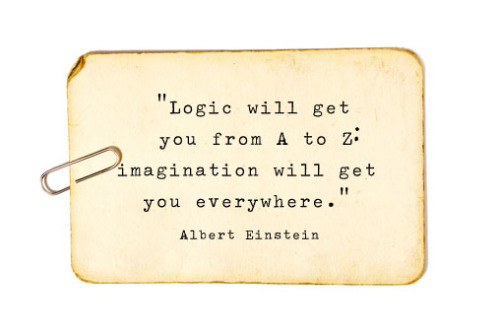
Logic and Imagination


Logic will get you from A to Z.

Imagination will get you everywhere.

--Albert Einstein
にほんブログ村 英語ブログ 小説・エッセイ・詩の英語へ

August 22, 2011

Revealed! Six facts about the female orgasm

While female orgasm has been the subject of so many myths and folk beliefs, scientists are trying their best to know more about the mystery behind the phenomenon.

And now, after some intense field research, a team of experts have uncovered six facts about the female orgasm, as revealed by modern science, reports New Scientist magazine.

The six facts are as follows:

The G spot is real

The G spot is a small region in the vagina that, if stimulated, can produce wildly intense orgasms - or so goes the popular claim. But, since decades, strong evidence for the region''s existence was harder to find than the spot itself.

However, in 2008, an Italian research team solved the mystery after they found anatomical differences between women who could have G-spot orgasms and women who couldn''t. And since then, researchers have since begun teaching women with G spots how to put them to use.

The brain switches off

It''s folk wisdom that people can''t think straight when they have sex on their minds, and a brain scanning study showed that many areas of women''s brains were deactivated during orgasm, including those involved in emotion.

Many women can't have orgasms

According to a 1999 survey, around 43 per cent of women in the US have some sort of problem with their sex lives.

Female sexual dysfunction (FSD) is so common that the very idea that it is a medical disorder has come under attack and thus efforts to develop drugs to treat it are underway.

Genes affect orgasm frequency

According to the first genetic study of the female orgasm, up to 45 per cent of the variation in women''s ability to have them could be down to genes.

Many women never have orgasms during intercourse, and some also cannot have them through masturbation. Some of this may be down to external factors like upbringing, but the study showed the genetic factor is significant.

Technology can help

Perhaps the most extreme solution for sexual dysfunction among women is the so-called "orgasmatron"-an implant inserted into the spinal cord, which stimulates the user when switched on via a remote control.

Despite an initial struggle to find subjects for clinical testing, the device is now in development.

Some mystery remains

The female orgasm is a puzzle for evolutionary biologists. It is unclear why women should have orgasms at all, and it is particularly baffling that so many women should be unable to have orgasms during penetrative sex, but able to have them by masturbation.

According to researcher Elisabeth Lloyd, this implies that female orgasms are an evolutionary accident. Like male nipples, they persist simply because there is no good reason to get rid of them.
にほんブログ村 英語ブログ 小説・エッセイ・詩の英語へ

Sex, Lies, and Survey Results

There is a seemingly ceaseless stream of studies that reduce each gender to a vaguely irritating stereotype. The men fear commitment, the women crave intimacy. One study suggests that a coquettish attitude and coy game-playing pave the road to seduction.
The two studies below have a characterization of gender that nearly describes the male and female leads of a formulaic romantic comedy. Though they come from peer-reviewed journals, their simplicity and repetition is reminiscent of Cosmo’s 500 variations of “500 Ways to Please Your Man – TONIGHT!”

Cuddling: Not A Male Priority
The Journal of Sex Research’s recent study “Sex Differences in Post-Coital Behaviors in Long- and Short-Term Mating: An Evolutionary Perspective” focuses on the intimacy gap between men and women after sex.
The study, conducted by Susan Hughes and Daniel Kruger at the University of Michigan, surveyed 170 college-aged students. The online survey listed options for the participant to rate their post-sex inclinations: talking, sleeping, cuddling, leaving the room, smoking and drinking, asking for favors, eating, and considering “the likelihood that pregnancy may have resulted.”
Women listed bonding activities like chatting and cuddling highest on the list of post-sex activities, while men preferred eating, smoking, or making a drink—generally activities that involved withdrawing into the next room.
The evolutionary analysis of this study explained: “Males tend to mate more opportunistically,” while females “are less likely to dissociate coitus from emotional involvement.” The “pair-bonding” activities were initiated and preferred much more by women than men, both in short-term and long-term mating. Enlightening: women prefer intimacy while men are programmed to sow their wild oats.
While these results are not particularly groundbreaking, the study of post-sex behavior is: this is one of the first studies to examine people’s predilections after sex. The vast majority of studies in human reproductive strategies discuss behaviors leading to sex: mating dances, primping, courtship rituals, and demonstrations of strength and desirability. But Hughes’s and Kruger’s study stresses that reproductive strategies don’t stop after intercourse. Mates are analyzed as long-term or short-term based on their actions following the main event. “These findings may not seem surprising, as they are consistent with evolutionary psychological theory,” Hughes and Kruger write, “but, to our knowledge, this is the first attempt to document and quantify post-coital preferences.”

Women Love Them Some Relationship Games
Meanwhile, another recent study in Psychological Science concluded that women are most attracted to men who make their feelings unclear. Conducted by two University of Virginia professors, Erin Whitchurch and Timothy Wilson, and Daniel Gilbert of Harvard, the “He Loves Me, He Loves Me Not…” study found that men who send mixed signals are the most desirable.
The test surveyed about fifty female undergrads at UVA. Each girl was shown four men’s Facebook profiles (fabricated for the study, but the participants believed they were real). The girls were told these men had viewed her profile along with those of a dozen or so other coeds. A third of the girls were told they were the most highly rated, a third were told they were rated as average, and a third were told they were rated either the most highly or average. It was the third group—the group uncertain about their male prospect’s attraction—that ranked the males as most attractive.
The study noted that while hearing that someone is attracted to you is affirming, it is not thrilling. “In contrast,” the study reports, “when people are uncertain about an important outcome, they can hardly think about anything else.” The study concludes with this statement: the “popular dating advice is correct: Keeping people in the dark about how much we like them will increase how much they think about us and will pique their interest.” Does this conclusion, then, encourage people to play games in their relationships? To keep everyone guessing because they’re worried they will turn their crushes off if they show some straight-up affection?
Perhaps, but only in the beginning. It seems that the study, rather than looking at substantive attraction, focused on initial frequency of thoughts. In the beginning, it is the uncertainty that heightens the attraction. “I don’t think it’s that people enjoy the chase,” Erin Whitchurch wrote in an email, “but that uncertainty increases our thoughts about a person in a very subtle way and that is what, to a certain extent, increases attraction.”
Furthermore, it’s worth nothng that the researchers chose to examine this initial attraction through a virtual medium. This lens of removal, Whitchurch says, helped her and her co-writers build a more believable situation. Certainly, the scenario was believable—people do peruse and pursue their potential crushes on Facebook—but in reality, relationships are hardly built solely on the Facebook interface; they’re usually just sparked there, in the same way that seeing someone at a party might spark a little crush.
“This study only explored initial romantic attraction—so no, this study does not support the idea of playing games once in a relationship,” Whitchurch writes. “Personally though, the advice I give my friends is to play the game to the point there is an obvious attraction—right to the point where you both want to admit your feelings—then wait until the next conversation, text, date to do that.” After all she warns, too much uncertainty can cause a partner to “get frustrated and quit.”

PLEASE YOUR MAN TONIGHT
Implicitly, these studies offer some form of advice, since empirical studies have an implied relationship to truth. In the case of these sex/love studies, they appear to shed light on the true predilections of members of the opposite sex.
The language often pits the genders against one another, and implies that there is an irresolvable gap between them. This might be why these peer-reviewed studies seem so close to magazine headlines. “16 Dirty Guy Phrases – Translated!,” actual Cosmo headline, runs off the same steam. Both these studies and “16 Dirty Guy Phrases” offer a translation of behavior between the two sexes.
Ostensibly, the information from these studies will wiggle into some advice offered in Cosmo or Maxim, as a sure-fire way to seduce the object of your desire. Though these studies are backed by empirical research, both will offer the same simplified vision of romance, sex, and love.

にほんブログ村 英語ブログ 小説・エッセイ・詩の英語へ

August 3, 2011

The Senate has passed the debt deal.

The U.S. House of Representatives on Monday voted 269-161 to approve a deal to raise the debt limit in a bill that would cut government spending by trillions and effectively raise the debt ceiling through the end of 2012.

The bill, which was brokered in last-minute negotiations between the White House and Congressional leaders, passed with the support of 174 Republicans and 95 Democrats, CBS reported this evening.
にほんブログ村 英語ブログ 小説・エッセイ・詩の英語へ